Personal Story of the Month |
|
|
|
|
|
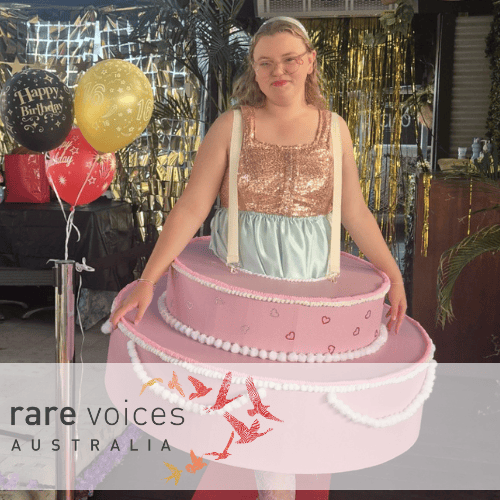
Gabby was diagnosed with Takayasu arteritis seven years ago. Her mother, Rebecca, shares her personal story, sharing the challenges the family experienced while navigating the healthcare system and the importance of care coordination. Rebecca's story also reiterates how people living with a rare disease often become experts in their condition.
|
| Read Rebecca's story |
|
|
|
|
National Disability Insurance Scheme Reset Must Safeguard People with Rare Disease Disability |
|
|
|
As the national peak body for Australians living with a rare disease, RVA acknowledges the Australian Government’s intent to strengthen the integrity and long-term sustainability of the National Disability Insurance Scheme (NDIS).
On 22 April 2026, the Hon Mark Butler MP, Minister for Disability and the NDIS and the Minister for Health and Ageing, addressed the National Press Club and issued a media release. Significant changes to the NDIS have been outlined, including measures to address fraud, cost growth and market failure. These objectives are understood and broadly supported by RVA.
However, the impact of the proposed reforms on people with rare, complex and lifelong disabilities will depend on how they are designed, sequenced and implemented. Sustainability cannot be achieved if cost containment becomes the practical driver of reform without sufficient attention to complexity, rarity, geography and cumulative health and disability impacts. Read the full article at RVA's website. |
|
|
|
|
Genetic Discrimination in Life Insurance |
|
|
|
The Banning Genetic Discrimination in Life Insurance Bill passed through Parliament on 1 April 2026. After receiving Royal Assent on 8 April 2026, the bill became the Treasury Laws Amendment (Genetic Testing Protections in Life Insurance and Other Measures) Act 2026 and can be found in the Federal Register of Legislation. On 8 October 2026, Schedule 1 (the portion banning genetic discrimination in life insurance) will become fully operational and enforceable.
We congratulate RVA Scientific and Medical Advisory Committee (SMAC) member, Dr Jane Tiller, who has been leading this important work! We also acknowledge SMAC member Professor Paul Lacaze’s contribution.
As the national peak body for Australians living with a rare disease, RVA supported the Australian Government’s announcement that it will legislate to ban the use of genetic test results in life insurance underwriting and welcomes the new Act. We acknowledge everyone involved in advocating for this important policy change. |
|
|
|
|
Have Your Say: Framework for Consumer Engagement in Health Technology Assessment |
|
|
|
The Consumer Evidence and Engagement Unit (CEEU) is developing a framework that sets out guiding principles, focus areas and actions to support better consumer engagement in health technology assessment (HTA). They’d like to hear people’s thoughts on the framework and how it could be improved. They will summarise the responses gathered and share the findings so that people can see what they heard and how the feedback was used to improve the framework. View the framework at the Department of Health, Disability and Ageing’s website. Have your say by Tuesday, 26 May 2026 by completing the survey on this web page.
|
|
|
|
|
Save the Dates: 2026 National Rare Disease Summit and 2026 Rare Disease Disability Network Showcase |
|
|
|
RVA will be hosting the next National Rare Disease Summit on 20 and 21 November 2026 in Melbourne. The 2026 Rare Disease Disability Network Showcase will take place on 19 November at the same venue. Attendance at both events is by invitation only to ensure appropriate representation across the sector. We will share more information with those invited as soon as possible. For now, please save these dates in your calendar if you anticipate receiving an invitation to either or both events. RVA will distribute save the date emails to those invited soon. |
|
|
|
|
‘Running for Resilience’ Podcast with RVA Ambassadors |
|
|
|
RVA Ambassador, Lauren Geatches, and inaugural RVA Ambassador, Tim Fulton, shared their stories on the Running for Resilience (R4R) podcast recently. Lauren and Tim share their stories of living with a rare disease and the parallels between their stories. They talk about diagnosis, day-to-day resilience, and what it takes for families to keep going when the path is uncertain. The podcast also explores the mental health and wellbeing impacts of living with a rare disease. Watch the podcast on YouTube or listen on Spotify. You can find mental health and wellbeing resources for people living with a rare disease on the Rare Awareness Rare Education (RARE) Portal. Medicare Mental Health lists several support services if urgent help is required. |
|
|
|
|
National Strategic Action Plan for Rare Diseases
The Australian Government's National Strategic Action Plan for Rare Diseases (the Action Plan) was launched in February 2020 by the Federal Minister for Health with bipartisan support. You can access the Action Plan via the Department of Health, Disability and Ageing's website and a suite of summary materials at RVA's website. |
|
|
|
|
First Position Paper Released: Global Nursing Network for Rare Diseases |
|
|
|
The Global Nursing Network for Rare Diseases (GNNRD) has released its first position paper, Advancing Global Nursing Education in Rare and Undiagnosed Disease. This work was led by GNNRD’s Education & Learning Committee and sets a clear direction for how to strengthen nursing and midwifery capability for rare and undiagnosed diseases. Most nurses and midwives receive little or no formal education in rare and undiagnosed diseases.
The position paper outlines practical, system-level actions across policy, education and health services, providing a pathway for governments, education providers, health systems and nurses to drive meaningful change. Download the position paper from the GNNRD’s website. |
|
|
|
|
Genomics Australia: Guiding Principles for Culturally Safe Genomics |
|
|
|
The Ensuring Culturally Safe Health Genomics with Aboriginal and Torres Strait Islander Peoples - Guiding Principles (Guiding Principles) were developed by the Aboriginal and Torres Strait Islander Advisory Group on Health Genomics. They provide guidance for health genomics clinical and research organisations to support improvements in the quality of care and health outcomes for Aboriginal and Torres Strait Islander people. Read the Guiding Principles on Genomics Australia’s website. |
|
|
|
|
29 April Was Undiagnosed Day |
|
|
|
29 April was Undiagnosed Day, which creates awareness for people living with undiagnosed diseases. Australians living with an undiagnosed rare disease are identified as a priority population in the Australian Government's National Strategic Action Plan for Rare Diseases. Around 50% of people with a rare disease who are assessed by a health professional will remain undiagnosed. If you think you or someone you care for may have an undiagnosed rare disease, some steps you can take are outlined on the Rare Awareness Rare Education (RARE) Portal. |
|
|
|
|
NHMRC Community Research Priorities Portal Open for Submissions |
|
|
|
The National Health and Medical Research Council’s (NHMRC) Community Research Priorities Portal (the Portal) allows consumers, community and professional groups to submit research topics that may warrant a dedicated funding call (grant opportunity) in the form of a Targeted Call for Research (TCR). A TCR is a one-time request for grant applications, designed to stimulate research or build research capacity in a particular area of health and medical science. The Portal is open for submissions until 30 June 2026. Learn more about the Portal on the NHMRC’s website. |
|
|
|
|
Workshop: Help Shape a Digital Tool for Genetic Neurodevelopmental Conditions |
|
|
|
Researchers from the University of Technology Sydney, in partnership with the Multicultural Disability Advocacy Association, are seeking parents or carers of a child with a genetic neurodevelopmental condition to participate in a workshop. Participants will attend a half-day workshop on Monday, 25 May 2026 (10am – 1pm) in Granville, New South Wales. The insights will help to inform the co-design of a digital tool to support other families as they learn about their child’s genetic diagnosis. More information about the workshop can be found on this flyer. Registration for the event is essential. To register, please contact mdaa@mdaa.org.au. |
|
|
|
|
The InFORMed Project: National Participation Information and Consent Form Template |
|
|
|
The InFORMed Project (the Project) template has been developed to support a participant-centred, simplified, national Participation Information and Consent Form (PICF). The Project aims to improve the efficiency and impact of health and medical research in Australia by making it easier for consumers to make decisions about participation. Download the PICF template, including a vision accessible version and user guide, on the InFORMed Project's website. |
|
|
|
|
Rare Awareness Rare Education (RARE) Portal |
Australia's Growing National Resource for Rare Diseases |
 |
| Download the social media pack |
|
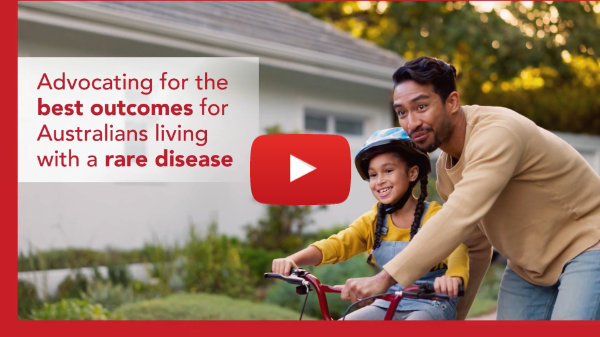
The RARE Portal is a living website in ongoing development, with new information added regularly. It contains verified rare disease information and resources, customised for the Australian context. Funded by the Australian Government, the RARE Portal is a key deliverable of the National Strategic Action Plan for Rare Diseases.
RARE Portal eNewsletter
Read the December 2025 RARE Portal eNewsletter. You can subscribe to receive upcoming RARE Portal newsletters by completing this form.
Multi-Stakeholder Consultation Process
The RARE Portal consultation process is ongoing and will include individual interviews with RVA Partner organisations in 2026.
Additions to the RARE Portal
Contribute to the RARE Portal
All rare disease stakeholders are invited to help maintain the currency and accuracy of information on the RARE Portal. If you would like to contribute content or suggest a revision, please reach out to the RARE Portal team via the Contribute page. |
|
|
|
|
|
|
|
The RARE Help page consists of resources that have been codesigned and evaluated by Australians living with a rare disease. The page consists of resources to address some of the most common questions RVA receives as the national peak body for Australians living with a rare disease. Information pages developed include:
|
|
|
|
|
|
|
Research Study: Help Create Accessible Technology for Pain and Stress Tracking/Reporting |
|
|
|
Researchers from the University of Sydney are interested in understanding the experience of people with difficulties expressing or communicating pain. Individuals with lived experience, carers, clinicians, and community organisations are invited to take part in a 2-hour workshop between March to June 2026. The insights gained will help to inform accessibility and the quality of future technology for pain reporting and tracking. More information about this study can be found on this flyer. To register your interest, please visit the University of Sydney’s website. |
|
|
|
|
Research Survey: Professional Contributions of Adult Siblings of People with Disability When They Enter Roles in the Australian Disability Sector |
|
|
|
Researchers from the University of New South Wales (UNSW) Sydney are interested in exploring the professional contributions of adult siblings of people with disability when entering roles in the Australian disability sector. The researchers are looking for people who are:
-
Siblings of a person with disability.
-
Working in a role that is specifically disability-focused. (The role could be in direct support and care, allied health, education or special education, disability services, disability tech, advocacy or policy, government or statutory authorities, or academia. It may also be in another area related to disability.)
-
Aged 18+.
-
Living in Australia.
You will be asked to complete an online survey about how your life experience with your sibling with disability impacts the way you do your job in the disability sector. The survey will take about 15 minutes. Learn more on UNSW Sydney’s website. |
|
|
|
|
Qualitative Interview Study: University of Melbourne |
|
|
|
Are you parenting a 5-18 year old? Does your child have experience living with a disability or life-limiting condition? You may be eligible to participate in a research study conducted by The University of Melbourne.
Researchers would like to speak to a range of people who are parenting and their adolescents about their thoughts on a general health questionnaire. The questionnaire might be used in research or clinical health settings and asks children (or their parents) to report on general difficulties with their: ‘mobility’; ‘looking after myself’; ‘doing usual activities’; ‘pain/discomfort’; and ‘feeling worried, sad or unhappy’. Researchers are interested in ways they might improve the questionnaire to better meet the needs of children and young people living with life-limiting conditions or disability. The interviews will go for 45 minutes to 1 hour.
To express your interest (EOI) in participating, complete this short survey by 22 June 2026. Researchers will be selecting a small number of participants and are aiming to reach people with a range of different experiences. They may not contact everyone who completes the EOI survey. |
|
|
|
|
International Rare Diseases Research Consortium (IRDiRC): New Courses for Rare Diseases |
|
|
|
The International Rare Diseases Research Consortium (IRDiRC) has released a series of online courses about rare diseases:
The courses have been developed by the Foundation for Rare Diseases, host of the IRDiRC Scientific Secretariat, with different European and international partners. The courses are aimed at students, researchers, healthcare professionals, biotech and start-up developers, consumer representatives, and anyone interested in broadening their knowledge of rare diseases. Free access to each course is available for a limited time. The courses are accredited by The CPD Certification Service, which is based in the United Kingdom. |
|
|
|
|
Rare Disease Disability Toolkit |
|
|
|
|
|
|
|
|
|
|
Rare Disease Disability Project News
Stakeholder Reference Group
Stakeholder Reference Group (SRG) members met for the second time this year in April. The SRG continues to provide lived-experience guidance for the Rare Disease Disability Project (the Project), co-design support for RVA Partner Projects and review of the next round of Rare Disease Disability Toolkit resources.
Virtual Kitchen Table Peer Support Sessions
The next virtual kitchen table peer support sessions will be held on Wednesday, 13 May 2026. The topic for these sessions is, Managing the life admin – tools, tips and strategies. Come and share any hints and tips, ideas and learn from others and connect through this peer support session.
These sessions are open to people:
-
Living with rare disease disability.
-
Caring for someone living with rare disease disability.
-
Who are not in a formal role in any RVA Partner group/organisation*.
The sessions are especially helpful for people living with rare disease disability and caregivers who:
-
Are looking for community, understanding, and support.
-
May not have or are still looking for a condition-specific support group.
-
Are newly diagnosed or navigating new challenges.
One session will be held for people living with rare disease disability and a separate session will be held for caregivers of people living with rare disease disability.
*Note: If you are an RVA Partner representative, you are welcome to join the Rare Disease Disability Network instead. Email RVA to join: disabilityprojects@rarevoices.org.au.
Session Details
Date: Wednesday, 13 May 2026
Registration
Session for people living with rare disease disability (12pm – 1pm AEST)
Session for caregivers of people living with rare disease disability (8pm – 9pm AEST)
Learn more about the Virtual Kitchen Table Peer Support Sessions at this web page.
Rare Disease Disability Network
The next Rare Disease Disability Network (RDDN) meeting will be held on 20 May. Members receive updates about the Project and are invited to showcase innovation and share learnings to strengthen the rare disease disability sector. Members also engage in disability reform discussions to genuinely make a difference for people living with rare disease disability. Learn more about the RDDN at RVA’s website.
Rare Voices Australia Partner Project Grants
RVA Partner Project Grants continue to progress. The latest updates can be found at RVA’s website.
For the latest updates about the Rare Disease Disability Project, visit RVA's website. For all questions related to this project, please email: disabilityprojects@rarevoices.org.au |
|
|
|
|
RVA Online Education
RVA's online education complements RVA’s Education Program and contains courses exclusively available to RVA Partners and other stakeholders. Once you have successfully completed a course, you will receive a certificate. You'll need to login or register via the website to access the courses. |
|
|
|
Course of the Month Social Media Risk Training |
|
This course is designed to assist rare disease groups/organisations to build engaged and thriving social media groups and effectively manage the risks to themselves and others. This training has been customised specifically for RVA Partner groups/organisations by Quiip, specialists in online community building and social media. |
|
|
|
|