Personal Story of the Month |
|
|
|
|
|
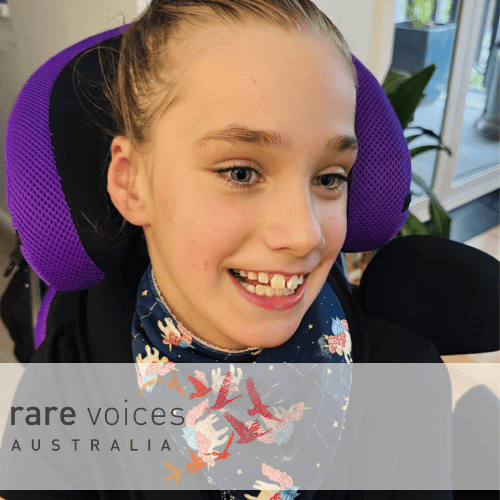
Grace's story highlights the uncertainty involved in rare disease and the importance of genome sequencing. As Grace's mum writes, "Grace is an amazingly determined little girl who never gives up." |
| Read Grace's story |
|
|
|
|
Save the Date Emails Distributed: 2026 National Rare Disease Summit and 2026 Rare Disease Disability Network Showcase |
|
|
|
RVA will be hosting the next National Rare Disease Summit on 20 and 21 November 2026 in Melbourne. The 2026 Rare Disease Disability Network Showcase will take place on 19 November at the same venue. Attendance at both events is by invitation only to ensure appropriate representation across the sector. Save the date emails have been distributed, and invitations will be sent shortly. |
|
|
|
|
Newborn Bloodspot Screening Update: MPS I, MPS II and Pompe Disease |
|
|
|
On 19 June 2026, Australian Health Ministers met to discuss several health system reform priorities. As published in the follow-up Communique, Health Ministers agreed to add mucopolysaccharidosis type 1 (MPS I) and type 2 (MPS II) to Australia’s newborn bloodspot screening (NSB) programs. RVA acknowledges those in the MPS community who have engaged in the NBS and Medical Services Advisory Committee (MSAC) processes for their advocacy.
At the meeting, Health Ministers supported MSAC’s recommendation not to introduce NBS for Pompe disease at this time. As stated in the Communique:
“This was because MSAC advised the current screening tests and diagnostic tests (including genetic tests) will mostly identify babies who may develop the late-onset form of Pompe disease that shows symptoms in adulthood. MSAC considered there to be a greater potential for harm than benefit from NBS for these children. The Department of Health, Disability and Ageing will continue to monitor emerging evidence relating to newborn screening for Pompe disease and reconsider its decision if appropriate.”
RVA acknowledges those who have engaged in the NBS and MSAC processes for these conditions for their efforts and ongoing commitment. We understand that this outcome is extremely disappointing for RVA Partner, the Australian Pompe Association, which has long been advocating for Pompe’s inclusion on the NBS. We acknowledge the ongoing lack of diagnostic pathways for Pompe disease and their impacts on those living with Pompe disease and their families. Read the full article at RVA's website. |
|
|
|
|
Update: Australian Rare Disease Research Network Meeting – June 2026 |
|
|
|
The second Australian Rare Disease Research Network (ARDRN) virtual meeting for 2026 was held in June. The ARDRN has grown to over 120 members, including rare disease researchers from a range of jurisdictions, disciplines and career stages. Importantly, there are members with research policy expertise, including representatives from Genomics Australia and Research Australia.
RVA thanks the 35 ARDRN members who joined the June meeting. Additionally, we thank guest speakers Louise Healy, RVA Education and Advocacy Manager; Zurani Ong, Lyfe Languages’ Operations Manager; and Clin/Prof Gareth Baynam, Director of the Centre of Expertise for Rare and Undiagnosed Diseases (Rare Care Centre), for sharing their work. We also thank ARDRN co-chairs, Dr Lisa Ewans and Clin/Prof Gareth Baynam, for co-chairing the meeting. Read the full update at RVA's website. |
|
|
|
|
Horizon Europe Opens Doors for Australian Researchers and Industry |
|
|
|
The National Health and Medical Research Council (NHMRC) has shared an exciting major step forward for Australian research and innovation, with treaty negotiations now concluded for Australia’s association to Horizon Europe, the world’s largest research and innovation program. RVA lodged a submission into the consultation on Australia’s potential association with Horizon Europe. From 1 January 2027, Australians will be able to apply directly for funding, opening the door to leading and collaborating on projects tackling global challenges.
This opportunity is broader than health and medical research. Australian researchers, industry and business can partner with leading researchers across Europe and beyond, helping Australian organisations plug into global supply chains and bring ideas to market faster.
As it moves towards full association, the NHMRC will continue supporting international collaboration. The 2026 NHMRC–Horizon Europe grant opportunity will proceed as planned, but no separate round will be offered in 2027. For enquiries, please contact: Horizon.Europe@industry.gov.au. |
|
|
|
|
Feedback Sought on Consumer Input into Health Technology Assessment |
|
|
|
The Office of Health Technology Assessment’s (OHTA) Consumer Evidence and Engagement Unit (CEEU) is exploring practical ways to give clear and consistent feedback to consumers and consumer organisations about how their input was used during the health technology assessment (HTA) process and in HTA committee discussions. This work responds to feedback from consumers and consumer organisation that have said they want to understand what happens to the input provided. To learn more and take the survey, visit the Department of Health, Disability and Ageing’s website. The consultation closes on 13 July 2026. |
|
|
|
|
National Strategic Action Plan for Rare Diseases
The Australian Government's National Strategic Action Plan for Rare Diseases (the Action Plan) was launched in February 2020 by the Federal Minister for Health with bipartisan support. You can access the Action Plan via the Department of Health, Disability and Ageing's website and a suite of summary materials at RVA's website. |
|
|
|
|
National Disability Insurance Scheme (NDIS): July Webinars |
|
|
|
The National Disability Insurance Scheme (NDIS) is facilitating a series of online webinars and forums in July, including two online community forums on Mandatory Registration of Supported Independent Living (SIL) and platform providers. These sessions will provide information about the upcoming changes. Delivered as a panel discussion, the sessions will cover what is changing, why these changes are being introduced, and what they may mean for participants, families, carers, and the broader disability community. The session details are below.
Mandatory Registration of Supported Independent Living (SIL) and platform providers
Dates: Wednesday, 1 July 2026 at 11am AEST and Thursday, 2 July 2026 at 4pm AEST
Register for free at the Humanitix website.
'Understanding the NDIS' Webinars
Understanding the NDIS webinars are national information sessions that outline the roles, responsibilities, and core processes of the NDIS. These sessions support participants, families, and communities to better understand, access, and navigate the NDIS. Download this PDF flyer to learn more about these webinars. For more information about upcoming events, visit the NDIS Events page. |
|
|
|
|
Research Study: Young Adults Living with a Rare Disease |
|
|
|
If you are 20-28 years old, live with a diagnosed rare disease and use social media, you may be interested in sharing your experiences and needs. Researchers at Fondation Ipsen are looking for people in this cohort to help shape future digital support resources through a research study. See the flyer. If you are interested, please email: fondation@ipsen.com. Fondation Ipsen is a non-profit foundation under the aegis of Fondation de France that focuses on advancing the needs of people living with rare diseases.
For more information about things to consider before participating in health and medical research, please visit the Considerations for Participating in Health and Medical Research page on the RARE Portal. |
|
|
|
|
Published in ‘InSight+’ by the ‘Medical Journal of Australia’: ‘The unmet needs of children with rare diseases in rural and remote Australia’ |
|
|
|
This article explores the unmet needs of children with rare diseases in rural and remote Australia, where families often face long travel distances, limited specialist access, poor continuity of care and fragmented support. Written by Australian Rare Disease Research Network member Dr Bradley MacDonald with several co-authors, including RVA Scientific and Advisory Committee member, Clin/Prof Gareth Baynam, the article highlights the difference that a cross-sector model of care that is person-centred can make to a child like Zade who lives with spinocerebellar ataxia type 29. Read the full article on the Medical Journal of Australia’s website. |
|
|
|
|
IRDiRC Consortium Assembly and Scientific Committees Meeting 2026 |
|
|
|
Earlier this year, members of the seven International Rare Diseases Research Consortium (IRDiRC) committees gathered in Sofia, Bulgaria for the IRDiRC Consortium Assembly and Scientific Committees Meeting. IRDiRC shared this video following the meeting as a reflection on their shared efforts to advance rare disease research and innovation.
IRDiRC unites national and international governmental and non-profit funding bodies, companies (including pharmaceutical and biotech enterprises), umbrella patient advocacy organisations, and scientific researchers to promote international collaboration and advance rare disease research worldwide. RVA is an IRDiRC member.
|
|
|
|
|
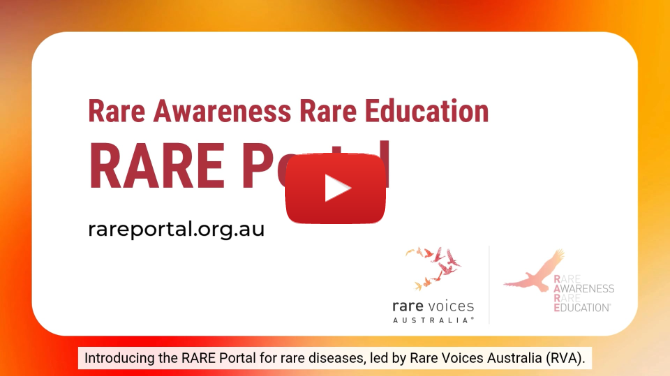
Rare Awareness Rare Education (RARE) Portal |
Australia's Growing National Resource for Rare Diseases |
 |
|
|
| Download and share the RARE Portal flyer |
|
The RARE Portal is a living website in ongoing development, with new information added regularly. It contains verified rare disease information and resources, customised for the Australian context. Funded by the Australian Government, the RARE Portal is a key deliverable of the National Strategic Action Plan for Rare Diseases.
RARE Portal eNewsletter
Read the June 2026 RARE Portal eNewsletter. You can subscribe to receive upcoming RARE Portal newsletters by completing this form.
Multi-Stakeholder Consultation Process
The RARE Portal consultation process is ongoing and will include individual interviews with RVA Partner organisations in 2026.
Additions to the RARE Portal
Contribute to the RARE Portal
All rare disease stakeholders are invited to help maintain the currency and accuracy of information on the RARE Portal. If you would like to contribute content or suggest a revision, please reach out to the RARE Portal team via the Contribute page. |
|
|
|
|
|
|
|
The RARE Help page consists of resources that have been codesigned and evaluated by Australians living with a rare disease. The page consists of resources to address some of the most common questions RVA receives as the national peak body for Australians living with a rare disease.
|
|
|
|
|
|
|
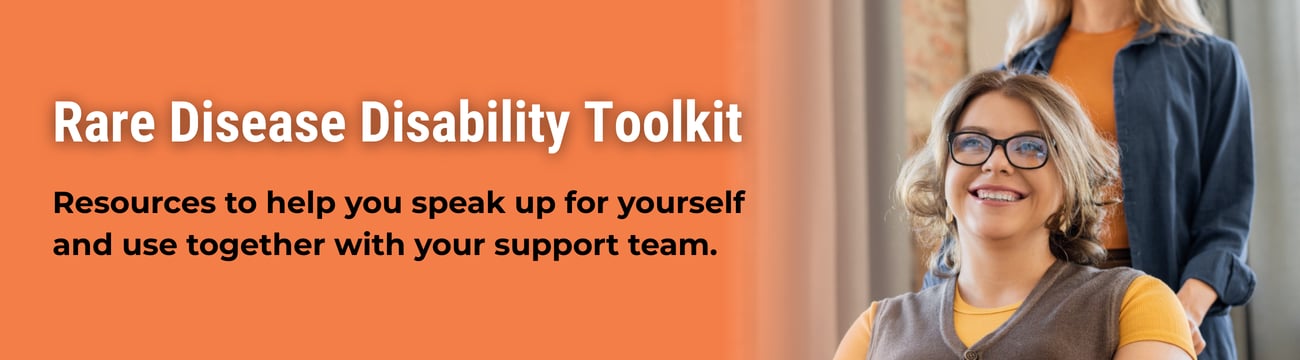
Rare Disease Disability Toolkit |
|
|
|
|
|
|
|
|
|
|
|
|
|
|
RVA Online Education
RVA's online education complements RVA’s Education Program and contains courses exclusively available to RVA Partners and other stakeholders. Once you have successfully completed a course, you will receive a certificate. You'll need to login or register via the website to access the courses. |
|
|
|
Course of the Month
Funding Rare Disease Organisations |
|
Designed for rare disease groups/organisations, this course provides information about funding sources and covers grant applications, pharmaceutical industry sponsorship, event fundraising, and donor management. |
|
|
|
|