Share

Read more
 ‌ ‌ ‌ ‌ ‌ ‌ ‌ ‌ ‌ ‌ ‌ ‌ ‌ ‌ ‌ ‌ ‌ ‌ ‌ ‌ ‌ ‌ ‌ ‌ ‌ ‌ ‌ ‌ ‌ ‌ ‌ ‌ ‌ ‌ ‌ ‌ ‌ ‌ ‌ ‌ ‌ ‌ ‌ ‌ ‌ ‌ ‌ ‌ ‌ ‌ ‌ ‌ ‌ ‌ ‌ ‌ ‌ ‌ ‌ ‌ ‌ ‌ ‌ ‌ ‌ ‌ ‌ ‌ ‌ ‌ ‌ ‌ ‌ ‌ ‌ ‌ ‌ ‌ ‌ ‌ ‌ ‌ ‌ ‌ ‌ ‌ ‌ ‌ ‌ ‌ ‌ ‌ ‌ ‌ ‌ ‌ ‌ ‌ ‌ ‌ ‌ ‌ ‌ ‌ ‌ ‌ ‌ ‌ ‌ ‌ ‌ ‌ ‌ ‌ ‌ ‌ ‌ ‌ ‌ ‌ ‌ ‌ ‌ ‌ ‌ ‌

Rare Voices Australia
May 2026 eNews

RVA logo

View this email in your browser

A Word From Our CEO

Image of RVA's CEO, Nicole Millis

Hi RVA Supporter,

On Tuesday, 12 May 2026, Treasurer the Hon Dr Jim Chalmers MP delivered the Albanese Government’s 2026-27 Federal Budget (the Budget). Rare Voices Australia (RVA) met with the Hon Mark Butler MP’s office (Minister for Health and Ageing and Minister for Disability and the National Disability Insurance Scheme) on 13 May to seek further clarification and provide initial feedback. The Budget delivered mixed outcomes for Australians living with a rare disease.


Increase in Medical Research Future Fund Investment


RVA welcomes the Australian Government’s decision to increase Medical Research Future Fund (MRFF) disbursements, lifting annual investment to $1 billion from 2030. This funding acknowledges the critical role that investment in health and medical research plays in improving health outcomes. RVA is proud to have contributed to the collective advocacy that led to this result and will continue advocating for a dedicated Rare Disease MRFF Mission to address the significant and ongoing gaps in rare disease research funding.


Insufficient Funding for Health Technology Assessment Reform Implementation


The rare disease sector has been let down by the Budget given Australia has spent years working on critical health technology assessment (HTA) reform consultation and recommendations – reform that is critical to Australians living with a rare disease. The HTA Review Implementation Advisory Group (IAG) delivered its final report and roadmap to Minister Butler in December 2025. We acknowledge work has commenced on the three recommendations endorsed by Minister Butler last September. However, the Australian Government had a responsibility to use this Budget to accelerate long-awaited HTA reform to address a lack of timely and equitable access to innovative therapies.


Ongoing Concerns Regarding National Disability Insurance Scheme Reforms


RVA remains concerned about the National Disability Insurance Scheme (NDIS) reset, particularly regarding the magnitude of cost savings announced in the Budget and the impact this could have on Australians living with rare disease disability.


RVA has lodged a submission to the Senate Community Affairs Legislation Committee Inquiry into the National Disability Insurance Scheme Amendment (Securing the NDIS for Future Generations) Bill 2026 (the Bill). We support the Australian Government’s intent to strengthen the integrity and long-term sustainability of the NDIS. However, RVA does not support the passing of this Bill as drafted and is calling on the Senate Community Affairs Legislation Committee to safeguard people living with rare disease disability and their families and carers. Our submission includes 11 recommendations. Read more about our submission at RVA’s website.


The Budget’s Failure to Recognise the Links Between HTA Reform, the NDIS and the MRFF


RVA previously applauded the integration of health and disability into one government portfolio, hoping it would facilitate more strategic, interrelated person-centred policy approaches. Unfortunately, the Budget missed the mark. MRFF investment (translational research), alongside the strong focus on achieving NDIS cost savings, makes the government’s lack of investment in HTA reform particularly inexplicable.


Next Steps for RVA and the Rare Disease Sector


RVA is calling on the Australian Government to urgently prioritise investment in HTA reform implementation.


Louise Healy, RVA’s Education and Advocacy Manager, Ann Single, RVA Scientific and Medical Advisory Committee member and Chief Executive Officer (CEO) of Patient Voice Initiative, and Sharon Winton, CEO at Lymphoma Australia, have contacted Minister Butler’s office to request a meeting with consumer group representatives to discuss HTA reform implementation.


Additionally, RVA has written to Minister Butler separately and contacted Senator the Hon Anne Ruston, Shadow Minister for Health and Aged Care. We’ve also met with Senator Wendy Askew, Co-Chair of the Parliamentary Friends of Australians Living with a Rare Disease (the Parliamentary Friends) and Senator for Tasmania and reached out to the other Parliamentary Friends Co-Chairs, Dr Mike Freelander MP, Member for Macarthur and Dr Monique Ryan MP, Member for Kooyong.


RVA encourages all rare disease stakeholders to contact their local member and Minister Butler to call for urgent investment in HTA reform implementation. Read RVA’s full reply to the Budget on RVA’s website.


Australia’s First National Health and Medical Research Strategy Released


RVA welcomes the launch of Australia’s first National Health and Medical Research Strategy 2026–2036 (the Strategy), a landmark step towards a more coordinated, equitable and impact-focused health and medical research system. We congratulate Rosemary Huxtable AO PSM and the broader Strategy development team for their work in shaping the Strategy.


RVA was encouraged to see our feedback reflected throughout the Strategy, including explicit mention of rare diseases and a strong emphasis on person-centred approaches to national collaboration, translation, equity and policy reform. However, our response to the draft Strategy highlighted the importance of a whole-of-person, whole-of-systems approach to health and medical research, including rare disease disability research. Given the cross-cutting impacts of rare disease across health, disability and other systems, and the Australian Government’s integration of health and disability into one portfolio, an opportunity was missed to more explicitly recognise the need to facilitate more strategic, interrelated person-centred research approaches that are both holistic and better coordinated. Read more about the importance of the Strategy for Australians living with a rare disease at RVA’s website.


Nicole Millis
Chief Executive Officer
Rare Voices Australia

Personal Story of the Month

Photo of Khal

Khal shares the importance of diagnosis and how rare disease often involves a multidisciplinary team of professionals. Additionally, Khal writes about how access to treatment has been life changing, improving the overall quality of his life.

Read Khal's story

Federal Budget 2026-27 and Australians Living with a Rare Disease

RVA News logo

On Tuesday, 12 May 2026, Treasurer the Hon Dr Jim Chalmers MP delivered the Albanese Government’s 2026-27 Federal Budget (the Budget). RVA continues reviewing the Budget’s impacts on the rare disease sector. The Budget delivers mixed outcomes for Australians living with a rare disease. We encourage the rare disease sector to contact their local member and the Hon Mark Butler MP, Minister for Health and Ageing and Minister for Disability and the National Disability Insurance Scheme, to call for urgent investment in health technology assessment reform implementation. Read more about the Budget and Australians living with a rare disease at RVA’s website.

RVA Submission: 'National Disability Insurance Scheme Amendment (Securing the NDIS for Future Generations) Bill 2026'

RVA News logo

As the national peak body for Australians living with a rare disease, RVA has lodged a submission to the Senate Community Affairs Legislation Committee Inquiry into the National Disability Insurance Scheme Amendment (Securing the NDIS for Future Generations) Bill 2026 (the Bill). RVA supports measures that strengthen the integrity and long-term sustainability of the NDIS. However, the Bill represents a fundamental shift away from the NDIS’ rights‑based, individualised design toward a more standardised and capped service model. This model can only work if adjacent systems are strengthened to absorb displaced needs and costs. RVA does not support the passing of this Bill as drafted. Read more about our submission at RVA's website.  

Australia’s First National Health and Medical Research Strategy Released

RVA News logo

RVA welcomes the launch of Australia’s first National Health and Medical Research Strategy 2026–2036 (the Strategy), a landmark step towards a more coordinated, equitable and impact-focused health and medical research system. We congratulate Rosemary Huxtable AO PSM and the broader Strategy development team for their work in shaping the Strategy.


RVA was encouraged to see our feedback reflected throughout the Strategy, including explicit mention of rare diseases and a strong emphasis on person-centred approaches to national collaboration, translation, equity and policy reform. However, our response to the draft Strategy highlighted the importance of a whole-of-person, whole-of-systems approach to health and medical research, including rare disease disability research. Given the cross-cutting impacts of rare disease across health, disability and other systems, and the Australian Government’s integration of health and disability into one portfolio, an opportunity was missed to more explicitly recognise the need to facilitate more strategic, interrelated person-centred research approaches that are both holistic and better coordinated. Read more about the importance of the Strategy for Australians living with a rare disease at RVA’s website.

Published: NHMRC Statement on Consumer and Community Involvement in Health and Medical Research

RVA News logo

The National Health and Medical Research Council (NHMRC) and the Consumers Health Forum of Australia (CHF) have released the new Statement on Consumer and Community Involvement in Health and Medical Research (the Statement). The Statement was developed collaboratively with consumers, communities and researchers, including with input from RVA as the national peak body for Australians living with a rare disease throughout. RVA attended online workshops, in-person roundtables and contributed a detailed written submission to inform review of the Statement. RVA commends the NHMRC and CHF for their careful review of the Statement and is pleased to see that so many of RVA’s recommendations have been implemented. See RVA's website for more information, including the feedback RVA provided that was implemented.

RVA encourages all rare disease researchers and consumers involved in research to familiarise themselves with the Statement and use this practical resource, together with its examples of best practice, to strengthen consumer involvement in research moving forward.

Update: Australian Rare Disease Research Network Meeting – May 2026

News logo

The first Australian Rare Disease Research Network (ARDRN) virtual meeting for 2026 was held in May. The ARDRN has grown to over 120 members, including rare disease researchers from a range of jurisdictions, disciplines and career stages. Importantly, there are members with research policy expertise, including representatives from Genomics Australia and Research Australia.


RVA thanks the 56 ARDRN members who joined the May meeting. Additionally, we thank ARDRN members, Dr May Aung-Htut, Dr Cherylea Browne, Dr Laura Croft and Associate Professor Honey Heussler, for sharing their research and ARDRN co-chairs, Clin/Prof Gareth Baynam and Dr Lisa Ewans, for co-chairing the meeting.


The focus of the meeting was Priority 1 of Australia’s Top 10 Rare Disease Research Priorities, ‘Development of, and access to, the best treatments and cures, including clinical trials’. Read the full update at RVA's website.

How the Navigating Air Travel with Rare Disease Disability Toolkit Resource Is Making a Difference

News logo

The Australian Government is implementing reforms to better protect the rights of airline and airport consumers. This includes the new Aviation Consumer Ombuds Scheme (the Scheme), an independent service to help consumers resolve complaints about airlines and airports, that sits within the Department of Infrastructure, Transport, Regional Development, Communications, Sport and the Arts.


The Interim Aviation Ombudsperson is developing an Australian Air Passenger Travel Guide. They have contacted RVA to seek permission to incorporate and draw on the Navigating Air Travel with Rare Disease Disability Toolkit (the Toolkit) resource for a chapter on accessibility. The intention is for the Australian Air Passenger Travel Guide to be translated into several languages.


This is wonderful recognition for this quality resource and is testament to the people living with rare disease disability who helped RVA to codesign these resources, including the Rare Disease Disability Project Stakeholder Reference Group and Rare Disease Disability Network members. 


The Toolkit resource was shaped by RVA’s participation in the Aviation Disability Standards co-design workshops in 2026. We extend our appreciation to the co-chairs of the Aviation Accessibility Steering Committee from the Australian Federation of Disability Organisations (AFDO) and People with Disability Australia (PWDA) for their work in this space. Read more at RVA's website.

Save the Date: 2026 National Rare Disease Summit and 2026 Rare Disease Disability Network Showcase

RVA News logo

RVA will be hosting the next National Rare Disease Summit on 20 and 21 November 2026 in Melbourne. The 2026 Rare Disease Disability Network Showcase will take place on 19 November at the same venue. Attendance at both events is by invitation only to ensure appropriate representation across the sector. We will share more information with those invited as soon as possible. For now, please save these dates in your calendar if you anticipate receiving an invitation to either or both events. RVA will distribute save the date emails to those invited soon.

National Strategic Action Plan for Rare Diseases


The Australian Government's National Strategic Action Plan for Rare Diseases (the Action Plan) was launched in February 2020 by the Federal Minister for Health with bipartisan support. You can access the Action Plan via the Department of Health, Disability and Ageing's website and a suite of summary materials at RVA's website.

My Health Choices My Way Mascot Competition

News logo

My Health Choices My Way (the Project) is an inclusive research project working with people with intellectual disability to improve health care transition. Young people aged 12-28 with intellectual disability are invited to create the official mascot for the Project. The mascot can be a person, animal, shape or something else. The winning design will be used in the Project’s website, videos and resources. The competition closes on 30 June 2026. More information about the competition can be found in this PDF.

Research Study: Have Your Symptoms Been Taken Seriously?

News logo

Researchers at Macquarie University are seeking participants for a study exploring how people with chronic physical health conditions, including rare diseases, experience healthcare. People have very different experiences when seeking healthcare, and researchers would like to hear about how your concerns have been understood and responded to. For some, their symptoms are quickly understood. For others, it can be harder to explain what they’re experiencing, or to feel taken seriously. If you or someone you know is aged 18+, lives in Australia and has a chronic physical health condition, you may be eligible to participate. The study involves a 15 to 20-minute online survey. All responses are de-identified and participation is entirely voluntary. Visit this web link to participate.

Rare Awareness Rare Education (RARE) Portal

Australia's Growing National Resource for Rare Diseases

RARE Portal: Australia's Growing National Resource for Rare Diseases
Download and share the RARE Portal flyer


The RARE Portal is a living website in ongoing development, with new information added regularly. It contains verified rare disease information and resources, customised for the Australian context. Funded by the Australian Government, the RARE Portal is a key deliverable of the National Strategic Action Plan for Rare Diseases.


RARE Portal eNewsletter


Read the December 2025 RARE Portal eNewsletter. You can subscribe to receive upcoming RARE Portal newsletters by completing this form.


Multi-Stakeholder Consultation Process


The RARE Portal consultation process is ongoing and will include individual interviews with RVA Partner organisations in 2026.


Additions to the RARE Portal

Contribute to the RARE Portal


All rare disease stakeholders are invited to help maintain the currency and accuracy of information on the RARE Portal. If you would like to contribute content or suggest a revision, please reach out to the RARE Portal team via the Contribute page.

RARE Help

The RARE Help page consists of resources that have been codesigned and evaluated by Australians living with a rare disease. The page consists of resources to address some of the most common questions RVA receives as the national peak body for Australians living with a rare disease. Information pages developed include:

Visit the RARE Help page

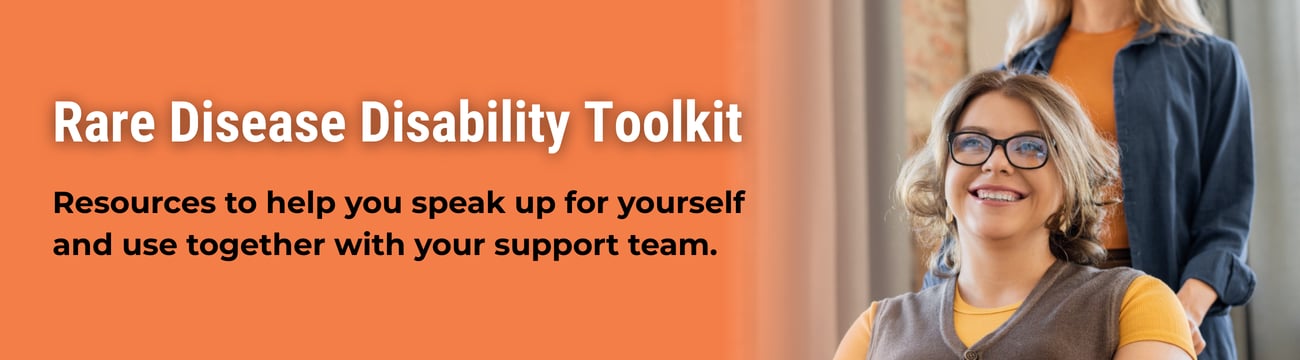
Rare Disease Disability Toolkit

Rare Disease Disability Toolkit: Resources to help you speak up for yourself and use together with your support team

The nationally codesigned Rare Disease Disability Toolkit (the Toolkit):

  • Includes new peer-to-peer supports.
  • Builds capacity in disability rights and self-advocacy.
  • Supports people to better access and navigate disability and other systems (such as health, education and employment).

First Round of Resources:

  1. National Disability Insurance Scheme (NDIS) and Rare Disease Disability – Part 1: Accessibility and Eligibility

  2. Reasonable Adjustments in Healthcare: What Can I Ask For?

  3. Navigating Air Travel with Rare Disease Disability

How to Use the Toolkit


Each resource includes a main guide and extra tools to help you speak up for yourself and use together with your support team. More resources will be added throughout 2026.


Share the Toolkit 

Toolkit Development


The Toolkit was codesigned with people living with rare disease disability and facilitated by RVA. The Toolkit was funded by the Australian Government through the Peer Support and Capacity Building grant for the NDIS as part of the Rare Disease Disability Project.

View the Toolkit resources

 Rare Disease Disability Project News 


Stakeholder Reference Group


Stakeholder Reference Group (SRG) members provide lived experience guidance to the Rare Disease Disability Project (the Project). In May, SRG members contributed to the review of the next round of Rare Disease Disability Toolkit (the Toolkit) resources and are participating in co-design with some RVA Partner Projects.


Virtual Kitchen Table Peer Support Sessions


Two virtual kitchen table peer support sessions were held on Wednesday, 13 May 2026. The topic was, Managing the life admin – tools, tips and strategies. These peer support sessions offer a safe space for people living with rare disease disability and their caregivers to connect, share experiences, and feel a sense of community. 


“I was made to feel welcome and could share as much information as I felt comfortable. It was casual but informative.” – participant


The final two sessions will be co-hosted with Rare Disease Disability Network (the RDDN) members — Myasthenia Alliance Australia (MAA) on 5 August and Genetic Alliance Australia (GAA) on 2 September.


Learn more about the Virtual Kitchen Table Peer Support Sessions at this web page.


Rare Disease Disability Network


The RDDN met on 20 May. Members engaged in meaningful discussions about disability reform collaboration and how to better support the rare disease disability community to have a stronger voice and more say in decisions. Members also showcased programs and innovations and shared cross-sector insights to help strengthen capability across the rare disease disability sector. Immune Deficiencies Foundation Australia spoke about their Circle of Support peer mentoring program and Leukodystrophy Australia spoke about the value of connecting with local disability networks to promote the needs of rare disease disability and the Toolkit. 


If you are an RVA Partner representative, you are welcome to join the Rare Disease Disability Network. Email RVA to join: disabilityprojects@rarevoices.org.au


Rare Voices Australia Partner Project Grants


RVA Partner Project Grants continued to progress in May. Learn more about the RVA Partner Project Grants at RVA's website.


For the latest updates about the Rare Disease Disability Project, visit RVA's website. For all questions related to this project, please email: disabilityprojects@rarevoices.org.au

RVA Online Education

RVA's online education complements RVA’s Education Program and contains courses exclusively available to RVA Partners and other stakeholders. Once you have successfully completed a course, you will receive a certificate. You'll need to login or register via the website to access the courses.

Course of the Month

Growing Up with Rare Disease Disability: The Realities for Siblings and Practical Approaches for Families and Carers

This program contains guides and information to help rare disease groups/organisations to facilitate Growing Up with Rare Disease Disability: The Realities for Siblings and Practical Approaches for Families and Carers workshops. The goal of the workshop is to empower parents and carers. It focuses on the experiences of Australian siblings of individuals living with rare disease disability and contains practical approaches for families and carers. 


This program was developed collaboratively by RVA Partner, Tuberous Sclerosis Australia (TSA), and RVA as part of the Rare Disease Disability Project (the Project). The Project is funded by the Australian Government through the Peer Support and Capacity Building grant for the National Disability Insurance Scheme (NDIS).  

See more courses
Email Marketing by ActiveCampaign