|
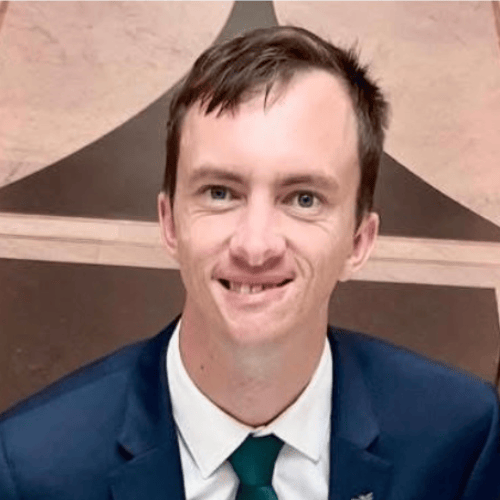
Andrew was born with three rare diseases. Andrew enjoys sports and has won several Australian paracycling titles. He is an active rare disease advocate and has played a pivotal role in organising Australian landmark illuminations for Rare Disease Day since 2020. Andrew is an Honorary RVA Ambassador. |
| Read Andrew's story |
|
|
|
|
Rare Awareness Rare Education (RARE) Portal |
|
|
Australia's Growing National Resource for Rare Diseases |
|
|
|
|
|
|
|
The RARE Portal is a living website in ongoing development, with new information added regularly. It contains verified rare disease information and resources, customised for the Australian context. Funded by the Australian Government, the RARE Portal is a key deliverable of the National Strategic Action Plan for Rare Diseases.
RARE Portal eNewsletter
Read the June 2025 RARE Portal eNewsletter. You can subscribe to receive an end-of-year update by completing this form.
Multi-Stakeholder Consultation Process
The RARE Portal consultation process is ongoing and will include individual interviews with RVA Partner organisations throughout 2025.
Additions to the RARE Portal
All rare disease stakeholders are invited to help maintain the currency and accuracy of information on the RARE Portal. If you would like to contribute content or suggest a revision, please reach out to the RARE Portal team via the Contribute page. |
|
|
|
|
Newborn Bloodspot Screening Open Call Launched |
|
|
|
The Department of Health, Disability and Ageing has launched an open call as part of the first stage of the newborn bloodspot screening (NBS) decision-making pathway. The first open call is open now and will close on 14 January 2026. The process supports the public to identify conditions that align with the criteria in the NBS National Policy Framework for consideration for NBS. See the Department of Health, Disability and Ageing’s website for more information, including how to participate and how conditions will be considered. |
|
|
|
|
Australian Government Invests $13.6 Million in Clinical Trials |
|
|
|
RVA welcomes the Australian Government’s investment of $13.6 million to progress key national health and medical research reforms, improve earlier access to emerging treatments, strengthen Australia’s clinical trials and deliver better health outcomes for Australians. The Hon Mark Butler MP, Minister for Health and Ageing and Minister for Disability and the National Disability Insurance Scheme, issued a media release to announce the news.
Why this announcement is important for Australians living with a rare disease
For many people living with a rare disease, participation in clinical trials is the only way to access treatment. The Australian Government’s National Strategic Action Plan for Rare Diseases outlines the importance of streamlining processes in Australia to reduce the barriers to clinical trials for rare disease. This funding will help to progress key mechanisms that contribute to achieving this such as the National One Stop Shop for clinical trials. |
|
|
|
|
RVA Submission: Draft National Health and Medical Research Strategy |
|
|
|
RVA congratulates Rosemary Huxtable AO PSM, Chair of the National Health and Medical Research Strategy (National Strategy), and the broader development team on releasing Australia’s first-ever draft National Health and Medical Research Strategy (draft Strategy). RVA acknowledges the challenges involved in bringing together diverse stakeholder perspectives and distilling them into an actionable strategic framework. The draft Strategy is appropriately detailed and future-oriented, with tangible examples of the change stakeholders want to see. RVA welcomes the inclusive tone and ambition of the draft Strategy, particularly its vision of “Delivering for All.” However, RVA has called for several important refinements to ensure the draft Strategy genuinely reflects the needs of all Australians, including those living with rare disease. Read RVA's key messages from our Submission in response to the draft Strategy via RVA's website. |
|
|
|
|
Rare Disease Disability Advocacy Update – October 2025 |
|
|
|
RVA has continued engaging in several key disability initiatives throughout 2025 to advocate on behalf of Australians living with rare disease disability. The October Rare Disease Disability Advocacy article includes updates on the Disability Discrimination Act Review and the Thriving Kids Initiative. Read the article at RVA's website. You can also read about the Rare Disease Disability Project at RVA’s website. We are proudly delivering projects for the Peer Support and Capacity Building grant for the National Disability Insurance Scheme (NDIS). |
|
|
|
|
Expressions of Interest Open for Health Technology Assessment Committee Memberships |
|
|
|
The Department of Health, Disability and Ageing is seeking expressions of interest (EOI) from those suitably qualified who would like to be considered for upcoming committee member vacancies on national health technology assessment (HTA) committees and sub-committees. Applications are welcome from individuals with a broad range of medical, health economic, consumer, and other HTA-related and clinical expertise. This includes registered medical practitioners, scientific and health-related professionals, and consumer, patient and industry representation. Full details are available on the Department of Health, Disability and Ageing’s website. EOIs must be received by no later than 11:30pm (AEDT) on 15 December 2025. |
|
|
|
|
New Rare Disease Project ECHO® Sessions for Health Professionals |
|
|
|
The Rare Disease Project ECHO® Clinical Community of Learning Practice is a continuing professional development activity delivered via interactive webinars. The initiative is a collaboration between Rare Diseases NSW and RVA, bringing together clinical, research and lived experience expertise. The webinars start with a presentation on a specific topic from an expert. This is followed by reflective discussion, which all participants are encouraged to join. New monthly Rare Disease Project ECHO® sessions are taking place from September to February 2026. The next session, From Crisis to Confidence: Rebuilding Trust with Rare Disease Families After Medical Trauma, is on 18 November 2025 at 6pm AEDT. See the full schedule of upcoming sessions on RVA's website. Register to attend via this web page. |
|
|
|
|
|
Note: Rare Disease Project ECHO® is an RACGP-approved CPD activity. However, the sessions are valuable for all health professionals. |
|
|
|
|
2026 Rare Disease Day Campaign Launches on 20 November |
|
|
|
Rare Disease Day is marked on the last day of February annually. In 2026, Rare Disease Day falls on Saturday 28 February. Rare Disease Day is the globally coordinated movement for rare diseases, working towards equity in social opportunity, healthcare, and access to diagnosis for people living with a rare disease. RVA is on the Steering Committee for Rare Disease Day, which focuses on longer term campaign strategy planning.
Globally, 300 million people worldwide live with a rare disease. Locally, Rare Disease Day is an opportunity to raise awareness and inform policymakers about the issues faced by the Australian rare disease community, with the aim to achieve the best outcomes for Australians living with a rare disease.
The 2026 Rare Disease Day campaign will launch 100 days out from 28 February on 20 November with the release of the official video. The 2026 promotion materials and the latest updates are available via the official Rare Disease Day website. If you are organising an event, you can share your event via this web page, so that it can be added to the global map. |
|
|
|
|
National Strategic Action Plan for Rare Diseases
The Australian Government's National Strategic Action Plan for Rare Diseases (the Action Plan) was launched in February 2020 by the Minister for Health with bipartisan support. You can access the Action Plan via the Department of Health, Disability and Ageing's website and a suite of summary materials at RVA's website. |
|
|
|
|
The Sawatzky Cup Returns in 2026 |
|
|
|
|
|
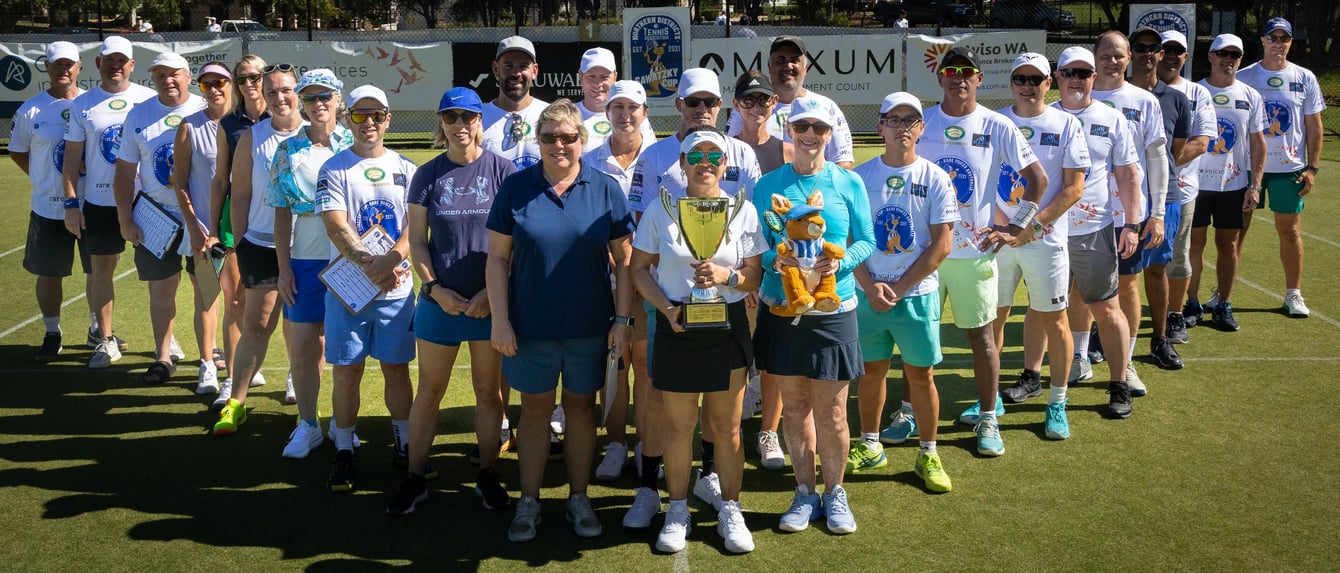
Image credit: Scotty's Media |
|
|
|
The Sawatzky Cup tennis tournament is back in 2026! The single-day doubles tennis event (men and women) is named after Perth player and the much-loved Ross Sawatzky, a tennis stalwart who died in early 2020 at 48 from the rare autoimmune disease, hemophagocytic lymphohistiocytosis (HLH). The 2026 Sawatzky Cup tournament will be played on the grass courts of Alexander Park Tennis Club in Western Australia on Saturday, 10 January 2026. All funds raised will be donated to RVA to help with overseeing the collaborative implementation of the Australian Government’s National Strategic Action Plan for Rare Diseases. Visit RVA’s website to make a donation and the official Sawatzky Cup website for the latest news and updates.
RVA thanks Ross’ mate and tournament organiser, Norman Burns, and everyone else who is making the 2026 Sawatzky Cup possible. We also thank those who attended this month's screening of The Princess Bride at The Revival House in Western Australia, which raised funds for the Sawatzky Cup. |
|
|
|
|
Rare Care Comprehensive Centre to Help Change Lives in Western Australia for Families with a Rare Disease |
|
|
|
Congratulations to RVA Scientific and Medical Advisory Committee member, Clin/Prof Gareth Baynam, and everyone involved in one of Western Australia’s biggest philanthropic gifts to fund the Rare Care Comprehensive Centre! The Stan Perron Charitable Foundation has committed a landmark $221 million over the next decade along with Perth Children's Hospital Foundation ($25 million) and The University of Western Australia ($3 million) to fund the Rare Care Comprehensive Centre. This funding will help to work towards the best outcomes for children and families living with rare diseases. Learn more at Mirage News. |
|
|
|
|
RVA Co-Authors Research Paper Published in 'The European Journal of Human Genetics' |
|
|
|
Nicole Millis, RVA’s Chief Executive Officer, has co-authored a research paper published in the European Journal of Human Genetics. “Jumping too far ahead”: Australian healthcare professional, scientist, and policy maker perspectives on using genomics in newborn screening was published as an output of gEnomics4newborns: Integrating Ethics and Equity with Effectiveness and Economics for Genomic Newborn Screening, an RVA Research Partnership. The paper explores how the future use of genomics in Australia’s newborn bloodspot screening (NBS) program is likely to be associated with both positive and negative impacts before stating, “Before adopting this technology, it is important to understand the views of all stakeholders, including scientists, health care professionals (HCPs) and policy-makers involved in delivering the program.” Read the paper on the European Journal of Human Genetics’ website. |
|
|
|
|
IRDiRC Research Paper Published in the 'Neuromuscular Disorders' Journal |
|
|
|
Applying the international rare disease research consortium (IRDiRC) N-of-1 therapy task force eligibility criteria for individualised therapies use case: Duchenne muscular dystrophy has been published in the Neuromuscular Disorders journal. The International Rare Diseases Research Consortium (IRDiRC) explores the eligibility of the roadmap developed by the N-of-1 Task Force (the first paper is available to read on the National Center for Biotechnology Information's (NCBI) website) by applying it to a real-world use case – Duchenne Muscular Dystrophy (DMD). |
|
|
|
|
RVA Online Education
RVA's online education complements RVA’s Education Program and contains courses exclusively available to RVA Partners and courses available to everyone. Once you have successfully completed a course, you will receive a certificate. You'll need to login or register via the website to access the courses. |
|
|
|
Course of the Month Illuminating Landmarks for Awareness Days |
|
Illuminating landmarks can be a powerful way to mark awareness days such as Rare Disease Day. Illumination activities showcase a united front and shine a light on rare diseases. They can raise awareness and help people and families living with a rare disease to feel seen and heard. Learn how to illuminate landmarks and maximise their impact. |
|
|
|
|
Research Study: Young Adults with Chronic Physical Health Conditions |
|
|
|
Researchers from Macquarie University are interested in understanding the challenges young adults face when living with a chronic physical health condition. This information may help inform future development of mental health programs designed specifically for young adults. If you are aged 18 to 29 years old and have a chronic physical health condition (lasting at least six months) that has been previously or is currently being managed by a healthcare professional, the research team invites you to participate in a 30-minute survey. Learn more at this web page. |
|
|
|
|
Research Study: Understanding the Measurement of Quality of Life in People with Rare Genetic Conditions and Their Carers |
|
|
|
The University of Melbourne, the University of Oxford, the University of Technology Sydney, Australian Genomics, Melbourne Genomics, RVA Partner, Mito Foundation, and Genetic Alliance UK are interested in understanding how well currently available quality of life measures capture the lived experience of people with rare genetic conditions and their carers. The results may help decision makers make decisions about which tests and treatments for rare genetic conditions should be funded (e.g. through Medicare, the Pharmaceutical Benefits Scheme). If you have a rare genetic condition, or are the parent/carer of a child or adult with a rare genetic condition, the research team invites you to participate in this survey. The survey should take between 30 - 45 minutes to complete. Learn more at this web page. |
|
|
|
|
Research Study: Developing Resources for People Considering Reproductive Genetic Carrier Screening in Australia |
|
|
|
Researchers from the Murdoch Children’s Research Institute and Macquarie University are researching what people need to decide if genetic carrier screening is right for them, and what types of resources would support that decision-making process. Your input will help improve the information and resources available to others who may consider screening in the future. If you are aged 18 to 50, the research team invites you to take part in a focus group or individual interview to share your thoughts on what information is helpful, and a follow up individual interview to provide feedback on a resource developed using insights from the first stage of this research. Participants can choose to take part in either or both parts of the study. Learn more and express your interest via this web page. |
|
|
|
|
Rare Disease Disability Project News
Stakeholder Reference Group
In October, the SRG:
-
Provided input into the first resources being developed for the nationally codesigned Rare Disease Disability Toolkit (the Toolkit)
-
Assessed applications for round 2 of the RVA Partner Project Grants
-
Reviewed current RVA Partner projects to ensure ongoing alignment with the priorities identified by the SRG
Toolkit resources will be progressively released with the first resources scheduled to be available on RVA’s website in December 2025.
RVA Partner Project Grants
RVA Partner organisations were invited to apply for funding as part of the second Rare Disease Disability Project grant round in September. Once again, RVA received a high number of applications. We thank the RVA Partners that took the time to apply. Applications were assessed on how well they aligned with grant objectives and deliverables. They were then ranked by the SRG. Based on the SRG’s ranking, RVA is delighted to offer grants to 3 RVA Partners:
-
Smith-Magenis Syndrome Australia is developing self-advocacy tools for parents and carers of children with delayed development to communicate better with health professionals and navigate health systems and disability supports
-
Batten Disease Support and Research Association Australia (BDSRA) is co-designing resources based on lived experience to help families, educators, and disability workers understand and respond to the episodic and fluctuating impacts of rare disease disability
-
Syndromes Without A Name (SWAN) Australia is creating an online training program for Peer Support Group Leaders. Resources will help parents and carers of children and adults with undiagnosed rare disease conditions connect with others and get the disability support that’s right for their needs
Learn more about RVA Partner Project Grants at this web page.
Rare Disease Disability Network
The RDDN met on 29 October bringing together almost 40 leaders from RVA Partner organisations to discuss the progress of the Rare Disease Disability Project and engage in disability reform discussions. Discussions included:
-
Presentations from RVA Partners offered grants as part of grant round 2 to provide an overview of their projects
-
A presentation by the National Disability Insurance Agency’s (NDIA) Children’s Policy and Pathways Branch on the new Childhood Early Intervention Pathway for children under 9
-
RVA's Submission to the Inquiry into the Thriving Kids Initiative
-
RVA's Submission to the review of the Disability Discrimination Act 1992
-
Discussion of a joint response to the NDIS Evidence Advisory Committee September 2025 consultation, which closes on 9 November 2025
Learn more about the RDDN at RVA’s website.
Rare Disease Disability Network Showcase
Registrations close tomorrow (31 October) for the end-of-year in-person RDDN Showcase on 2 December 2025 in Brisbane ahead of the International Day of People with Disability on 3 December. The RDDN Showcase brings together leaders from rare disease groups/organisations and other invited sector stakeholders for the first time in person. Attendance is by invitation only to ensure appropriate representation across the sector. RVA looks forward to welcoming those attending in December!
Virtual Kitchen Table Peer Support Sessions
The next virtual kitchen table peer support sessions will be held on 20 November 2025. One session will be held for people living with rare disease disability and a separate session will be held for caregivers of people living with rare disease disability.
Session Details
Date: Thursday, 20 November 2025
Registration
Session for people living with rare disease disability (12pm – 1pm AEDT)
Session for caregivers of people living with rare disease disability (8pm – 9pm AEDT)
The topic for these sessions is, Getting the Right Support: Ensuring Quality in Rare Disease Disability Care.
Come and share any hints and tips, ideas and learn from others and connect through this peer support session.
Note: If you are an RVA Partner representative, you are welcome to join the RDDN as these sessions are for the general public. Email RVA to join: disabilityprojects@rarevoices.org.au
For the latest updates about the Rare Disease Disability Project, visit RVA's website. For all questions related to this project, please email: disabilityprojects@rarevoices.org.au |
|
|
|
|
RARE Helpline |
 |
|
|
|
The RARE Helpline provides service navigation support for rare and complex diseases. It aims to provide timely access to information and answer key questions people living with a rare and complex disease often face.
|
|
|
Contact Information and Hours
Phone: 0499 549 629
Hours: Monday to Friday 9am – 5pm (AEDT)
Note: In the event of an emergency, call an ambulance on 000 or these support lines:
|
| Visit the RARE Helpline |
|
|